amorlina

Relationship tools and quizzes

The family dinner

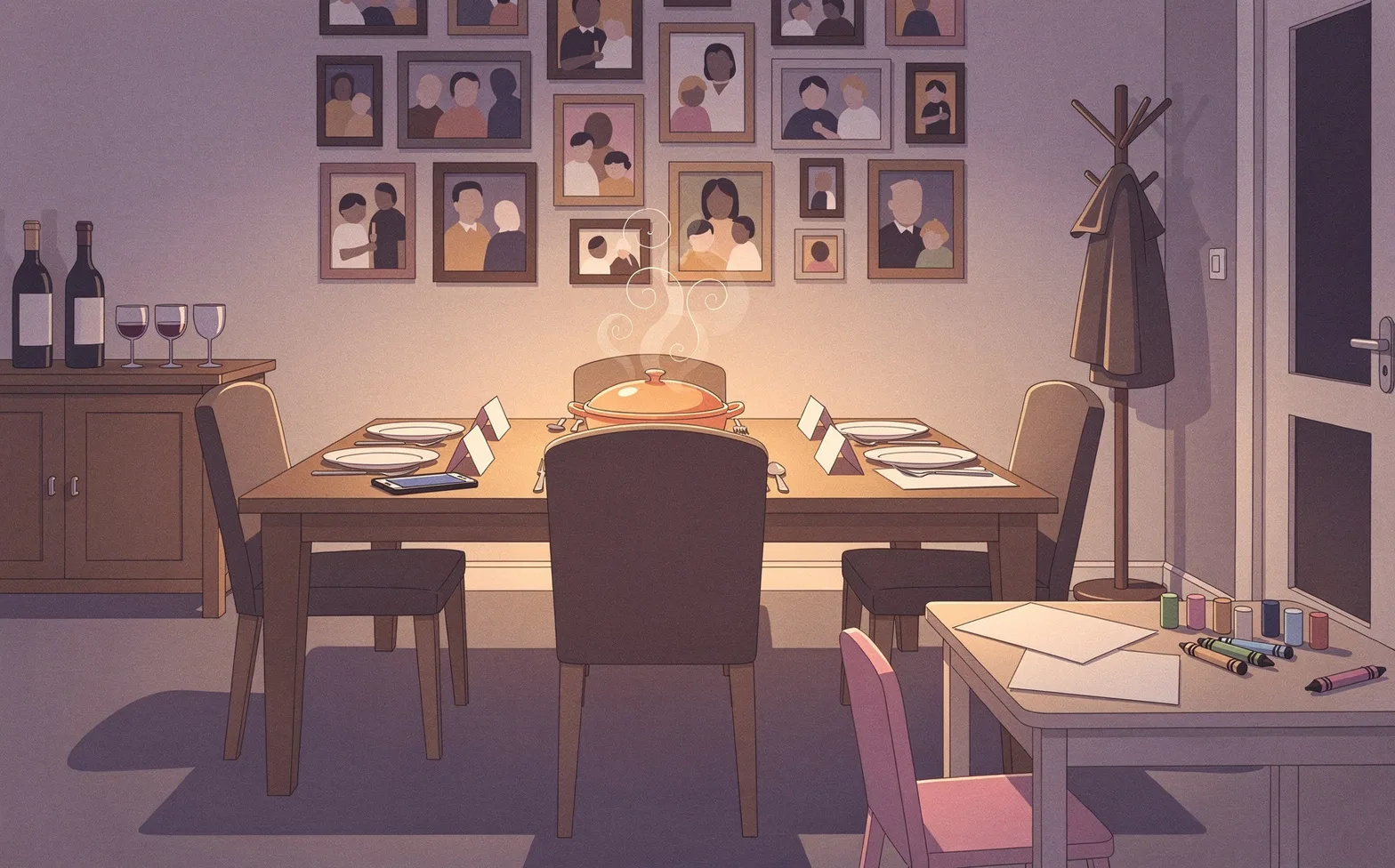
In one hour the doorbell starts. The table is set, the casserole is steaming, and every object in this room is already carrying a conversation that has not happened yet. Tap the glowing spots and see what family dinners are really made of. There are eight to find.

A warm dining room before a family dinner: a long table set with folded name cards, one empty chair facing the viewer, a steaming casserole in the middle, a smartphone lying on the table, wine bottles and glasses on a sideboard, a wall of framed family photos, a small kids table with crayons, and a coat rack by the door with one coat.

You found all eight

A family dinner is never just a meal. It is a seating chart, an empty chair, a dish that means love, and a room full of people trying to be both who they were and who they have become. You cannot control the table; you can decide who you are at it. That is usually enough.

Talk it through with an AI coach

What is the family dinner?

The family dinner is an interactive game about surviving family gatherings: one illustrated dining room, one hour before the relatives arrive, and eight clickable objects. Behind each one is a real dynamic of holiday family stress translated into plain language: the seating politics in the name cards, the estrangement in the empty chair, the expectations baked into the casserole, the comment the phone on the table is about to cause.

It takes about five minutes, and it is deliberately set before the dinner, because that is when the stress actually lives. Most holiday tension is anticipation: the conversations you are already having in your head while you fold napkins.

How to play

  • Look around the dining room and tap anything that glows.
  • Read the short card: one honest family dynamic per object.
  • Follow the trail: each card links to a tool or read that goes deeper.
  • Find all eight and the room gives you its last word.

How to survive a family dinner, actually

The reliable moves are unglamorous. Decide with your partner beforehand that you are a team, whatever gets said. Know the role your family assigns you and choose consciously whether to play it. Rehearse your one hard sentence in advance, softened, so glass-two comments do not write your reply for you. Give yourself an exit time and name it early. And remember that the kids table is listening to everything, including how you handle all of the above.

None of this requires the family to change; that is what makes it work. If a particular dinner, or a particular chair, keeps following you home, you can talk it through with an AI relationship coach that remembers your story, or explore the other relationship tools before the next gathering.

Frequently asked questions

Why are family dinners so stressful?
Because they compress everything: old roles, unresolved history, current judgments, and love, into a few hours at one table. Around family, most adults get partially recast as the person they were at fifteen, while being evaluated as the person they are now. Holding both at once is genuinely hard, and the stress is a normal response, not a personal failing.
How do I handle rude comments at the family table?
Prepare one calm boundary sentence before you arrive, something like "I am not discussing that tonight, pass the potatoes," and say it once without heat. Repetition, not escalation, is what makes it hold. If the comments continue, leaving the room or the dinner early is a legitimate boundary, not a scene. You teach the table how to treat you by what you calmly decline.
Should I skip the family dinner entirely?
Sometimes, yes. If gatherings reliably leave you or your partner damaged for days, distance is a valid form of self-respect, and estrangement from harmful dynamics is more common than families let on. But skip deliberately, not reactively: decide in a calm week, tell people plainly, and consider a smaller alternative, coffee with the relatives you do want, so the boundary targets the dynamic rather than every person at the table.

These tools are for reflection, not diagnosis. They are not a substitute for professional care.