amorlina

Relationship tools and quizzes

The morning after

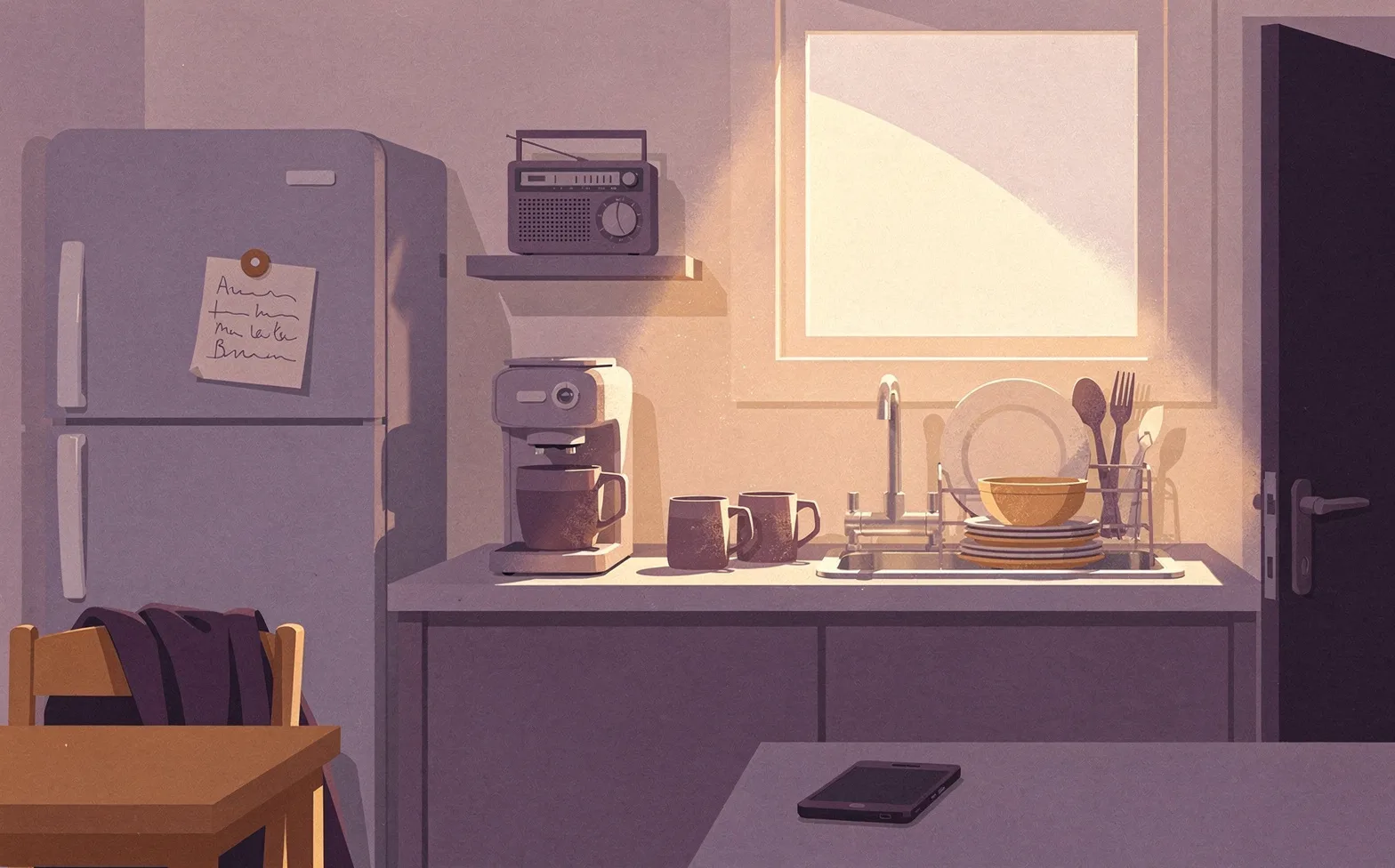
Last night there was a fight. Nobody slept well. This kitchen is full of small doors back to each other; tap the glowing spots and see what repair actually looks like. There are eight to find.

A soft morning kitchen: a note pinned on the fridge, a coffee machine with a full pot, two mugs on the counter, dishes drying by the sink, a phone face down on the table, a jacket over a chair, a small radio on a shelf, and a door standing ajar.

You found all eight

Repair is rarely one big conversation. It is a note, a mug put down without a word, a song turned on at the right moment. Couples who last are not the ones who never fight; they are the ones who find these doors the next morning.

Talk it through with an AI coach

What is the morning after?

The morning after is an interactive repair game: one illustrated kitchen the morning after an argument, eight clickable objects, and behind each one a real repair move translated into plain language. It takes about five minutes and covers what research and long marriages agree on: repair is small, it is physical, and it usually starts before anyone says the word sorry.

Every object is ordinary on purpose. A note on a fridge, a pot of coffee made for two, dishes nobody wants to claim. Making up after a fight rarely looks like the movies; it looks like a kitchen at 7:40am and someone deciding to reach first.

How to play

  • Look around the kitchen and tap anything that glows.
  • Read the short card: one honest repair move per object.
  • Follow the trail: each card links to a tool or read that goes deeper.
  • Find all eight and the kitchen gives you its last word.

How to make up after a fight, actually

The research on couples who last is surprisingly consistent: they do not fight less, they repair faster. Repair is not one grand apology; it is a sequence of small reaches, a note, a coffee, a hand on a shoulder, an honest first sentence at the door, each one an offer to be a couple again. The skill is twofold: making those reaches, and catching the ones your partner makes instead of letting them sail past on principle.

If this kitchen looks familiar, the next step is saying the harder thing out loud. You can talk the fight through with an AI relationship coach that remembers your story, or rehearse the conversation first with the other relationship tools.

Frequently asked questions

Who reaches out first after a fight?
Whoever can. It is tempting to treat reaching first as losing, but in couples that last, reaching first is a role that alternates rather than a scoreboard. If you always reach first and it is breeding resentment, that is worth saying out loud, gently and not mid-fight.
How long should we wait before talking about it?
Long enough for both nervous systems to settle, short enough that the story does not harden. For most people that is somewhere between an hour and a day. A named return time, "tonight at eight, after dinner", beats both stonewalling and forcing it at the door.
What if my partner rejects the repair attempt?
One rejected reach is information, not a verdict: they may need more time than you do. Leave the door open and try a smaller channel, a note instead of a talk, a coffee instead of a note. If every reach gets rejected for days at a time and this is a pattern, that is a bigger conversation about how you two repair, and worth having in a calm week.

These tools are for reflection, not diagnosis. They are not a substitute for professional care.