Caring for aging parents without a sibling war
Published July 8, 2026 · 9 min read
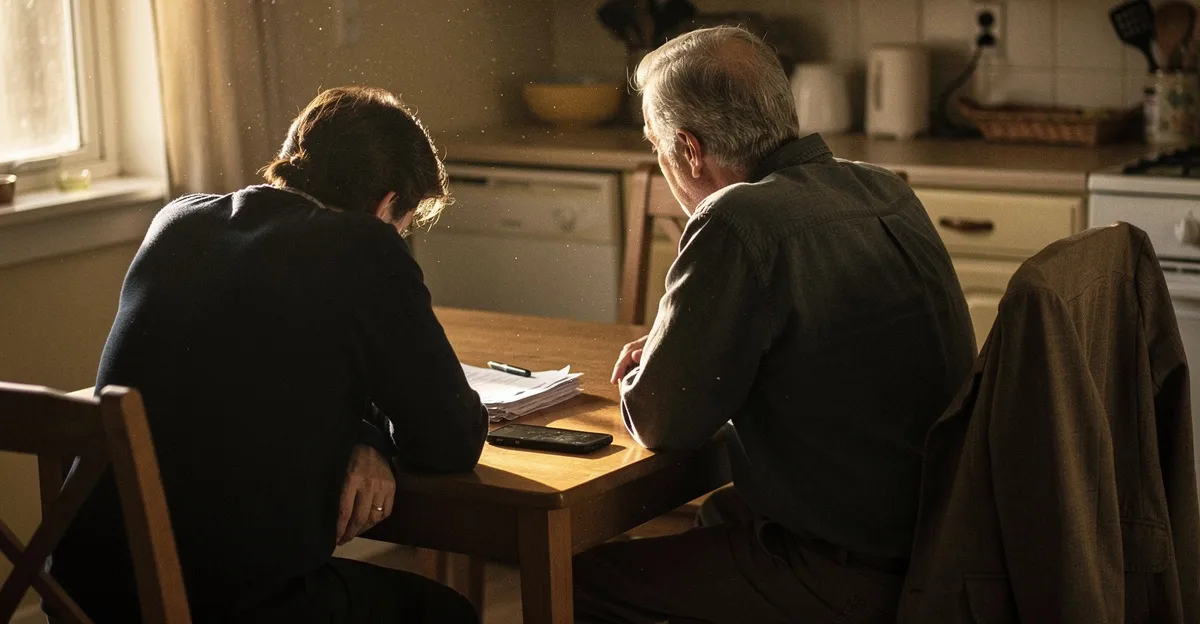
It is 9pm on a Tuesday. You have just left your mother's place after sorting her medication for the week, and your phone buzzes. It is your brother, who lives forty minutes away and has visited twice this year: "How is Mom doing?" You stare at the message and feel something between rage and exhaustion, because you know that whatever you type back, next Tuesday will look exactly like this one.
If that is roughly your life right now, here is the first thing to know: this is not a personality problem. In most families, care for aging parents lands on one sibling. Usually the one who lives closest, or the daughter, or the one who "was always good at this stuff." The load is structural before it is personal. But the fights it produces are personal, and they are almost never about what they seem to be about.
The fights are not about the schedule
On the surface, sibling caregiving fights look logistical. Who drives to the cardiologist. Who did not show up on Sunday. Who booked a vacation during the surgery week. But if scheduling were the real problem, a shared calendar would have solved it, and you have probably already tried a shared calendar.
Underneath, three things are usually burning:
- Recognition. The primary caregiver is not mainly asking for hours. They are asking for someone to say, out loud, "you are carrying this and I see it." When that sentence never comes, every small logistical failure becomes proof of a larger insult.
- Old roles reactivating. A parent's decline drags everyone back into the family they grew up in. The responsible eldest becomes the responsible eldest again. The baby of the family gets excused again. You can be fifty-two years old and still fighting about who Mom trusted with the car keys in 1994.
- Money fears nobody says out loud. Who pays for the home aide. Whether the house will need to be sold. Who quietly wonders whether the sibling doing the caregiving is also positioning themselves for the inheritance. Almost no one says these things directly, so they leak out sideways as sniping about visits and doctors.
Once you see this, the useless argument becomes visible. Here is what it usually sounds like:
Both people leave that exchange angrier and nothing changes. "Help more" is unanswerable, and "you always have to be the martyr" is the old role talking. Compare the same moment with two changes: a specific ask, and one sentence of recognition given before it is demanded.
Notice what made the second version work. Nobody became a better person overnight. The ask just became something a human being could say yes or no to.
The specific-ask rule
Here is the single most useful rule in sibling caregiving: never ask for "more help." Ask for a named, bounded, recurring task.
"Help more" fails for a reason. It has no edges, so the other person cannot know when they have done it, which means they can never succeed, which means they stop trying. A specific ask has edges: "Take the Tuesday appointments." "Own all communication with the insurance company." "Pay the aide's invoice on the first of each month." "Take Mom for the full weekend once a month so I can leave town."
Specific asks do something else too: they force the refusals into the open. A sibling can dodge "help more" forever with vague goodwill. They cannot dodge "will you take the Tuesday appointments, yes or no" without you both hearing the no. That is uncomfortable, and it is progress, because now you are negotiating with reality instead of with fog.
A script for the ask itself: "I am not asking you to do as much as I do. I am asking you to fully own one piece so I never have to think about it. Which piece can you own?" The phrase fully own matters. A task you still have to remind them about is not a task they took. It is a task you now manage through them.
The family meeting that actually works
Most families try to sort this out through a chain of one-on-one phone calls, which is how you end up with three different versions of the plan and a group chat full of shrapnel. What works better is one structured conversation. Here is a format that holds up:
- Schedule it as a meeting, with a date. Not "we should talk sometime." Video call is fine for the far-away sibling. Sixty to ninety minutes, hard stop.
- Start with a plain status report. The primary caregiver lists what Mom or Dad actually needs each week: appointments, medication, meals, bills, house, transport. Facts only, no accusations. Write it where everyone can see it.
- Say the recognition sentence early. If you are not the primary caregiver, open with it: "Before anything else, we all know most of this has landed on you, and that is not fair." Thirty seconds of this defuses more than an hour of logistics.
- Divide by task ownership, not by hours. Every recurring need on the list gets exactly one owner. Hours will never be equal. Ownership can still be complete.
- Put money on the table explicitly. What care costs now, what it might cost later, who pays what, and whether the sibling doing hands-on care should be compensated from the parent's funds. Saying it out loud is what stops it from festering. Where the stakes are legal, a family lawyer or mediator is worth the fee.
- End with a written summary and a review date. One message to everyone: who owns what, starting when, revisit in eight weeks. Care needs change, so the plan has to be a draft, not a treaty.
Before the meeting, not during it
Permission to accept an unequal arrangement
Here is the part almost nobody says: the arrangement will not be equal, and chasing equality is a good way to stay furious forever. Your sister in another country cannot do Tuesday appointments. Your brother with three small kids cannot take overnight stays. Insisting that everyone carry identical weight means insisting on a fight you cannot win.
What you can insist on is an explicit arrangement. Unequal and explicit is livable. Unequal and unspoken is what breeds contempt. There is a real difference between "I do everything because nobody else will" and "I do the daily care, my brother covers forty percent of the aide's cost and all the paperwork, and we all know it and said so." The second sentence describes the same unequal hours, but it has recognition and consent built into it.
The far-away or lower-capacity sibling still owes three things: money on the table if hours are off it, complete ownership of the tasks that can be done remotely, and the recognition sentence, said regularly and unprompted. If you are that sibling, calibrate your check-ins toward the caregiver, not just the parent:
When it is heavier than logistics
Some situations are beyond what any meeting format fixes. If a sibling's addiction is draining a parent's accounts, if there is elder abuse or neglect, or if a caregiver is sliding toward genuine despair, those need professionals, not scripts and not an app: a doctor, a lawyer, adult protective services, or a therapist, depending on the problem. Getting real help in those cases is not escalation. It is the responsible move.
Quick questions
My siblings refuse to help at all. What then?
Should the sibling doing the care be paid from our parent's money?
How do I stop resenting my sibling even after we agree on a plan?
You will not get the childhood fairness ledger balanced. Nobody does. What you can get is a plan where every task has one owner, the money is spoken about in daylight, and the person carrying the most hears, regularly and out loud, that everyone knows it. That is not a perfect family. It is a workable one, and workable is what gets a parent cared for without the siblings losing each other along the way.