Bids for connection: the small moments that matter most
Published juillet 8, 2026 · 11 min read
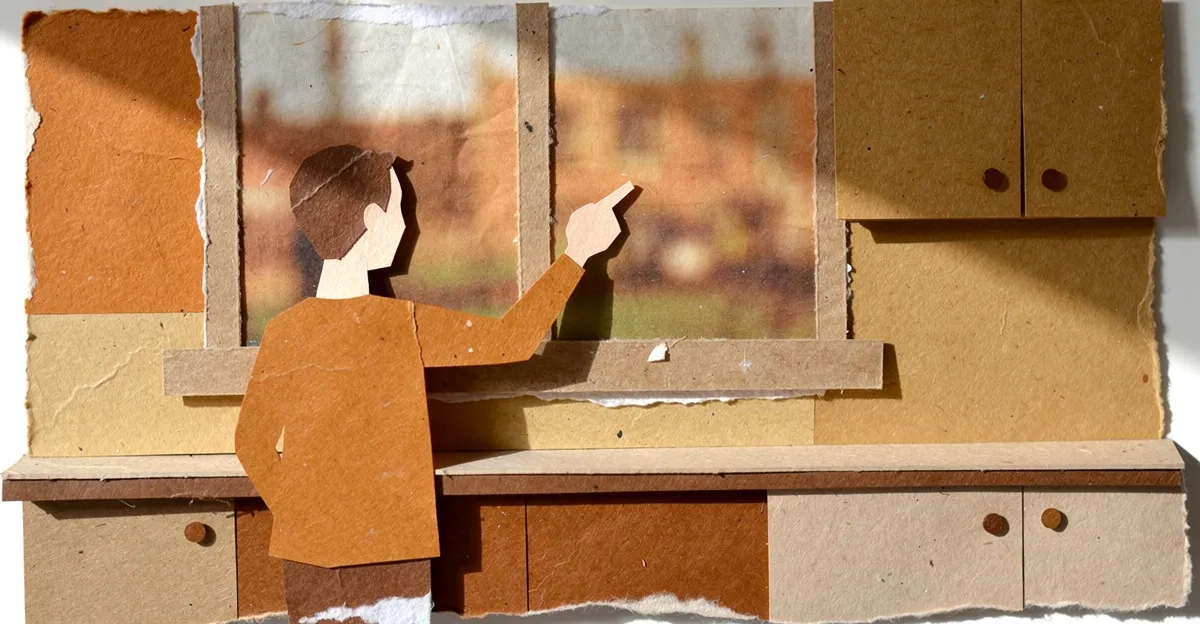
Your partner is at the window and says, "Huh, the neighbors got a new car." You are on the couch, phone in hand, halfway through something. You say "mm," and do not look up. Nothing happened. No fight, no slammed door, nothing you could name in a therapist's office. And yet something did happen. A small offer was made, and it landed nowhere.
Researchers who study couples have a name for that offer: a bid for connection. It is any attempt, however tiny, to get your partner's attention, interest, or affection. A sigh from the other room. A link texted at 2pm. "Did you see this?" A hand resting on your shoulder while you cook. Bids are the smallest unit of a relationship, and it turns out they are also the best predictor of whether the relationship survives.
The Gottman studies followed newlywed couples over years, watching how they behaved in ordinary moments, not just in arguments. The finding is stark. Couples who were still together years later had turned toward each other's bids 86% of the time. Couples who divorced had turned toward only 33% of the time. Read that again. The couples who split were not ignoring each other completely. They were responding to one bid in three. That was enough to hollow the whole thing out.
Relationships rarely die in the big fights. They die by missed glances, at a rate of a few per day, quietly, over years.
What a bid actually looks like
The reason bids get missed is that almost none of them announce themselves. Nobody says "I would like some emotional connection now, please respond warmly." Instead you get camouflage:
- "Did you see this?" means "be with me for a second."
- "I'm so tired" means "notice me, maybe care for me a little."
- "There's a spider in the bathroom" means "come be near me, and also there is a spider."
- A loud sigh from the kitchen means "ask me what's wrong."
- "We should really book that trip" means "tell me you still want a future with me in it."
The content is almost never the point. The bid is underneath the content. This is why so many well-meaning partners fail the test while technically answering the question. Your partner says "look at this dog video," you say "cute" without looking, and you have answered the words and missed the person. What they were asking was not "is this dog cute." It was "share this small moment with me." Those are different requests, and only one of them was met.
Some bids are even harder to read because they arrive wearing armor. A partner who has been missed too many times often starts bidding in negative ways: a complaint, a sarcastic jab, a pointed "must be nice to relax." It is unpleasant, and it is still a bid. Underneath "you never take the bins out" there is often "I want to feel like we are a team." You do not have to reward the delivery, but if you only ever respond to the tone and never to the bid inside it, you both lose.
A rule of thumb for armored bids
The three ways you can respond
Every bid gets one of three responses, whether you choose consciously or not.
Turning toward. You engage, even briefly. You look at the dog video. You say "new car? What did they get?" You put a hand on the sighing shoulder. This does not require enthusiasm or depth. It requires acknowledgment. In the research, the turning-toward moments were mostly mundane and lasted seconds.
Turning away. You miss it or ignore it. The "mm" without looking up. Silence. Changing the subject. This is rarely malicious. It is usually tiredness, distraction, or a phone. But the person who made the bid cannot see your inner state. They only see the miss, and their nervous system logs it.
Turning against. You respond with irritation. "Can you not see I'm busy?" "Why do you always send me this stuff?" This is the most corrosive response, but here is the counterintuitive part from the research: turning away is often more damaging over time than turning against. An irritated response is at least a response. A partner who gets snapped at will fight back or complain. A partner who gets nothing at all eventually stops bidding. And when the bids stop, the relationship goes quiet in a way that feels peaceful and is actually terminal. If your evenings have become polite and parallel, that silence may be the sound of retired bids. We wrote about that slide separately in what to do when you feel like roommates.
Here is what the same tiny moment looks like when it goes each way. First, the miss:
Nothing dramatic. But "it wasn't important" is the sound of a bid being filed away as evidence. Now the exact same moment, turned toward:
Same bid, same evening, same tired person on the couch. The second version cost about six seconds more than the first. That is the entire price difference between 86 and 33.
How to spot a disguised bid in real time
You cannot turn toward what you do not see, so the first skill is detection. A practical filter: whenever your partner says or does something small and slightly unnecessary, treat it as a possible bid. Nobody needs to tell you about the neighbor's car. The telling is the point.
Three questions help in the moment:
Is this information they need to transmit, or a moment they want to share? "The plumber comes at 9" is logistics. "This coffee is amazing" is a bid. If the sentence has no practical function, its function is connection.
Is there a feeling under the words? "I have so much on this week" is not a calendar update. It is an invitation to say "that sounds like a lot, want to talk it through?"
Is this touch, presence, or hovering? Not all bids are verbal. A partner who wanders into the room where you are working and just sort of exists near you is bidding. So is the hand on the back, the raised eyebrow across a dinner table, the "come to bed soon?"
You will not catch everything, and you do not need to. The lasting couples missed one bid in seven. The goal is not perfection. The goal is a ratio your partner can feel.
How to turn toward when you are exhausted
Here is the honest problem: most bids arrive when you have the least to give. End of the workday, mid-task, one eye on a child, brain fried. The advice "just be more present" is useless at 9pm on a Tuesday. What you need are low-cost moves that still count.
The six-second turn. Stop what you are doing, look at them, respond to the actual bid, then go back. "Show me the dog." Watch it. Smile. Done. Six seconds of full attention beats six minutes of half attention, and your partner can tell the difference instantly.
Name your state and stay in the game. If you genuinely cannot engage, say so while still turning toward: "I'm completely fried and I want to hear this. Give me twenty minutes to reboot and then tell me properly." That is a turn toward with a delay, and it works, on one condition: you actually come back. A deferred bid you never return to is just a slow turn away.
Match the size of the bid. A small bid needs a small response. You do not owe every "look at this" a conversation. "Ha, that's great" with eye contact fully pays the bill. People burn out on turning toward because they think it demands depth. It demands accuracy.
Repair the misses out loud. You will miss bids. Everyone does. The move that separates couples is noticing afterward: "You told me something about your sister earlier and I was half listening. Tell me again, I'm actually here now." That one sentence converts a miss into a turn toward, retroactively. If the miss stung more than usual, a real acknowledgment goes further than a quick sorry, and it is worth doing properly.
Start bidding better yourself
This works in both directions. If your own bids keep getting missed, check the packaging before you conclude your partner does not care. Disguised bids are efficient when they land and brutal when they do not, because the miss feels like proof of something. Try making one bid a day slightly less disguised: "Come sit with me for ten minutes, I miss you" is harder to say than "did you see this," and much harder to miss. You are not being needy. You are giving your partner a bid they can actually see.
And notice what happens to your own bidding when you are hurt. Most of us stop bidding or start bidding in barbed ways, then read the resulting distance as confirmation. If that loop sounds familiar, gently restarting your own bids is often the fastest way to change the temperature of the whole house.
The pattern is easier to see with a second pair of eyes
Here is what makes bids genuinely hard: they are invisible from inside. Nobody remembers the "mm" from Tuesday. You remember the fight about the dishwasher, not the forty small misses that loaded the argument before it started. By the time a couple notices the pattern, they usually cannot reconstruct it.
This is one of the places where talking it through with an AI relationship coach that remembers your story actually helps, precisely because it holds the small stuff you forget. When you describe your evenings week after week, the pattern becomes visible: the bids you make, the ones you miss, the times "I'm so tired" was really a request. Not because an AI coach knows your partner, but because it remembers what you told it last month and can point at the shape of it. To be clear about limits: if your relationship involves violence, trauma, addiction, or a mental health crisis, an AI relationship coach is not the tool, and a therapist is the right call.
See your own pattern
Quick questions
What is a bid for connection, in one sentence?
Do I have to respond to every single bid?
What if my partner never responds to my bids?
For everyone else, the work is smaller and closer than it looks. Not a grand gesture, not a scheduled date night, not a hard conversation. Just this: the next time your partner says something small and unnecessary, look up. That is the whole move. Done a few times a day for years, it is the difference between 86 and 33.