Why You Always Fight on Vacation (and How to Stop)
Published Juli 8, 2026 · 11 min read
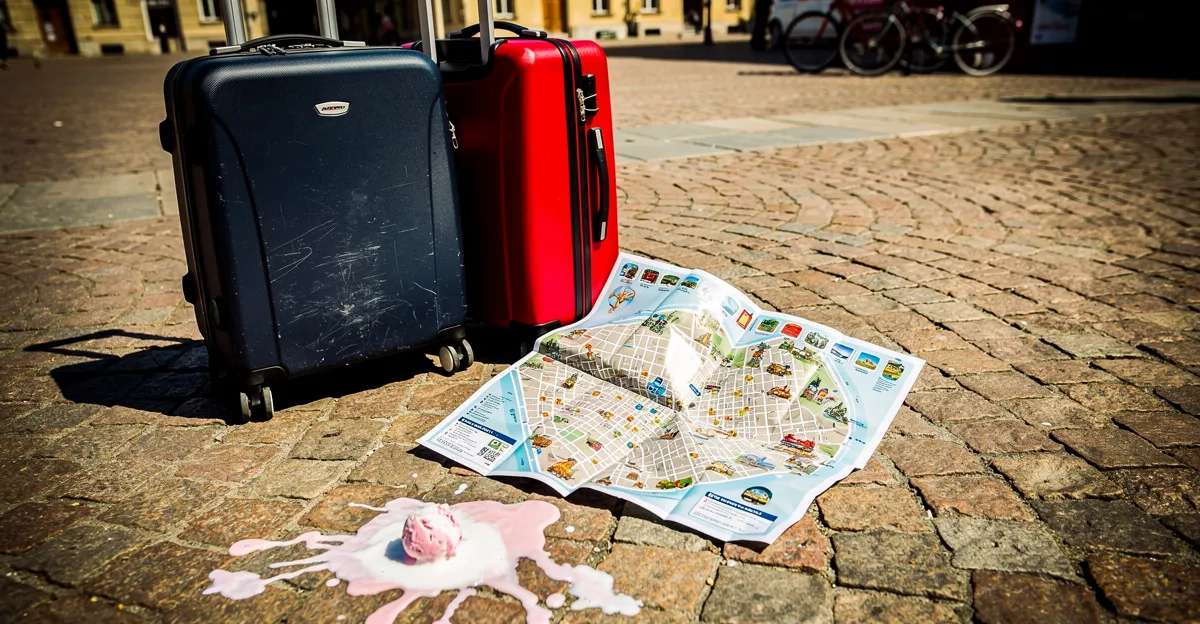
You saved for months. You booked the flights, argued pleasantly about the hotel, told everyone at work how much you needed this. And now it is day two, you are standing outside a restaurant in a beautiful city, and you are hissing at each other about whether to wait for a table. The trip you planned to reconnect has turned into the trip where you cannot stand each other.
If that is you right now, hiding in a hotel bathroom scrolling your phone while your partner sulks on the balcony, here is the first thing to know: this is one of the most common experiences in couples who are doing fine. Fighting on vacation is not a verdict on your relationship. It is what happens when you take two tired people, remove every routine that normally keeps them steady, and put them in a pressure cooker labelled "best week of the year."
Let us look at why the pressure cooker works the way it does, and then at what actually helps, both mid-trip and before the next one.
Vacations stack every trigger at once
At home, your relationship runs on scaffolding you do not notice. You each have a commute, a desk, a gym slot, a group chat, a side of the couch. Conflict gets diluted across time and space. On vacation, all of that scaffolding is gone, and in its place you get a stack of stressors that would strain anyone:
- Exhaustion. You arrive already depleted. The week before a trip is usually the most stressful of the month: deadlines crammed in, packing at midnight, a 4am alarm for the airport. You start the "relaxing" part of the trip with an empty tank, and tired brains are terrible at generosity.
- Money, constantly. At home you make a handful of spending decisions a week. On vacation you make thirty a day, out loud, together, in real time. Every menu, museum, and taxi is a tiny referendum on your different relationships with money.
- Zero personal space. You are together for 16 waking hours a day, often in one room, sometimes in one bed smaller than the one at home. Even people who adore each other are not built for that without a pressure valve.
- Trip-of-a-lifetime pressure. This one is sneaky. The more the trip cost, in money or anticipation, the higher the stakes on every moment. A mediocre dinner is not just a mediocre dinner, it is a wasted evening of the precious week, and that pressure makes you brittle.
- Decision fatigue with no default. At home, most days decide themselves. On vacation, nothing is default. Where to eat, what to see, when to leave, whether it is worth the queue. Each decision is small. Fifty a day is not.
Notice what is missing from that list: anything about whether you love each other. Vacation fights are mostly about conditions, not character. That does not make them pleasant, but it should change what you do about them. You do not need to fix your relationship on a beach. You need to fix the conditions.
A useful reframe
The fight is rarely about the thing
The argument outside the restaurant is not about the restaurant. It is usually one of two deeper currents surfacing.
The first is unspoken expectations colliding. One of you has been quietly picturing this trip for months: slow mornings, long lunches, nowhere to be. The other has been picturing it too: the hike, the old town, the market that closes at noon. Neither picture is wrong. But nobody said theirs out loud, so each of you experiences the other's plan as sabotage. "Why are you rushing me" and "why are you wasting the day" are the same fight from two ends.
The second is the intimacy versus independence squeeze. Every couple runs a constant, mostly invisible negotiation between togetherness and autonomy. At home the negotiation settles itself through routine. On vacation it has to be renegotiated hourly, and most couples do not realize they are negotiating at all. They just feel smothered, or abandoned, and snap.
If your vacation fights feel suspiciously like your home fights wearing sunglasses, that is real too. Travel does not invent new conflicts so much as amplify the standing one. If you keep circling the same disagreement in every setting, it may help to read about why you keep having the same argument with your partner, because vacations only turn up the volume on it.
Alone time on a couples trip is allowed
This deserves its own section because so many couples treat it as unthinkable. Wanting an hour to yourself on a romantic trip feels like an insult to the trip. It is not. It is maintenance.
You are two people with different social batteries, different sleep needs, and different ideas of fun. Pretending otherwise for seven straight days does not create closeness. It creates the eggshell politeness of two people suppressing irritation, followed by the blowup on day four.
The move is to make solo time explicit and guilt-neutral. Say it plainly before anyone is annoyed, and offer it as generously as you take it:
Two hours apart, taken cleanly and without punishment, buys you a better afternoon than any activity you could book. The couples who travel well together are almost never the ones who spend every minute together. They are the ones who separate briefly and come back with something to talk about.
The five-minute pre-trip expectations talk
Most vacation fights are preventable with one short conversation that almost nobody has. Do it in the week before you leave, not at the airport gate. Five minutes, five questions, each of you answers all five:
- What does a successful trip look like to you? One sentence each. "I want to feel rested" and "I want to see things we cannot see at home" are different trips. Better to find out now.
- What is your one non-negotiable? The single thing that, if it happens, makes the trip a win for you. One each. You both commit to protecting the other person's.
- What is our rough daily budget, and what is splurge-worthy? Agree on a number and on one or two categories where you will not count. This converts thirty daily money referendums into one decision made in advance.
- What is our pace? Planner or drifter? Alarm or no alarm? If you differ, split the days: some scheduled, some unplanned, decided upfront so neither of you has to fight for your style in the moment.
- How do we take space? Agree now that either of you can call a solo hour or morning, no justification needed, no sulking billed for it later.
Write the answers in your phone. When the day-three friction comes, and some will come, you are not improvising a treaty while hungry and sunburned. You are just pointing at one you already signed.
Mid-trip repair, when you are already in it
Maybe you are reading this from the hotel bathroom and the pre-trip talk is a lovely idea for next year. Here is triage for right now.
Name the conditions out loud. "I think we are fried and hungry and this is not really about the restaurant" is a surprisingly powerful sentence. It moves you and your partner to the same side of the table, facing the situation instead of each other. Here is that same restaurant moment again, with the conditions named:
Shrink the day. When a trip goes sideways, couples often try to rescue it by doing more. Do less. Cancel one thing. Eat early. Sleep. Almost every vacation fight looks smaller after nine hours of sleep and a real breakfast.
Repair fast and small. On vacation you do not have the luxury of a two-day cool-off, and you do not need a grand reconciliation. "I was snappy at the museum and I am sorry, that was tiredness talking" said within the hour beats a perfect apology delivered tomorrow. Then let it actually end. No relitigating over dinner.
Do not audit the trip while you are on it. "This whole vacation is ruined" is exhaustion talking, and saying it out loud makes it truer. One bad afternoon is one bad afternoon.
One honest caveat that matters more than travel tips: if your fights involve fear, violence, or contempt that follows you home, or if one of you is struggling with addiction, trauma, or a mental health crisis, that is not a vacation logistics problem. That is a therapy problem, and a licensed therapist is the right call, full stop.
What to do with all of this when you get home
The most useful thing about a vacation fight is what it shows you. Stripped of routine, your relationship's real patterns become visible: who over-plans when anxious, who withdraws when crowded, where the money tension actually lives, how you each ask for space, or fail to. Couples who talk about that on the flight home turn a rough trip into the most useful week of their year. Couples who just want to forget it repeat it next summer, different city, same fight.
The catch is that the debrief conversation is hard to have alone together. It slides back into the fight, or gets dropped because life resumes on Monday. It helps to have a place to think out loud that remembers your story: what happened in Lisbon, what you agreed to try, what came up again in October.
Thinking it through after the trip
Quick questions
Is it normal to fight with your partner on vacation?
Should we cut a vacation short after a big fight?
How do I ask for alone time on a trip without hurting my partner's feelings?
Because the goal was never a fight-proof vacation. It was two tired people learning to be on the same team in unfamiliar places. That is learnable, and the next trip is a fresh chance to prove it.