amorlina

Relationship tools and quizzes

The moving boxes

The van is gone, the keys are on the hook, and half of everything is still in cardboard. This living room is full of small negotiations waiting to happen; tap the glowing spots and see what moving in together is actually made of. There are eight to find.

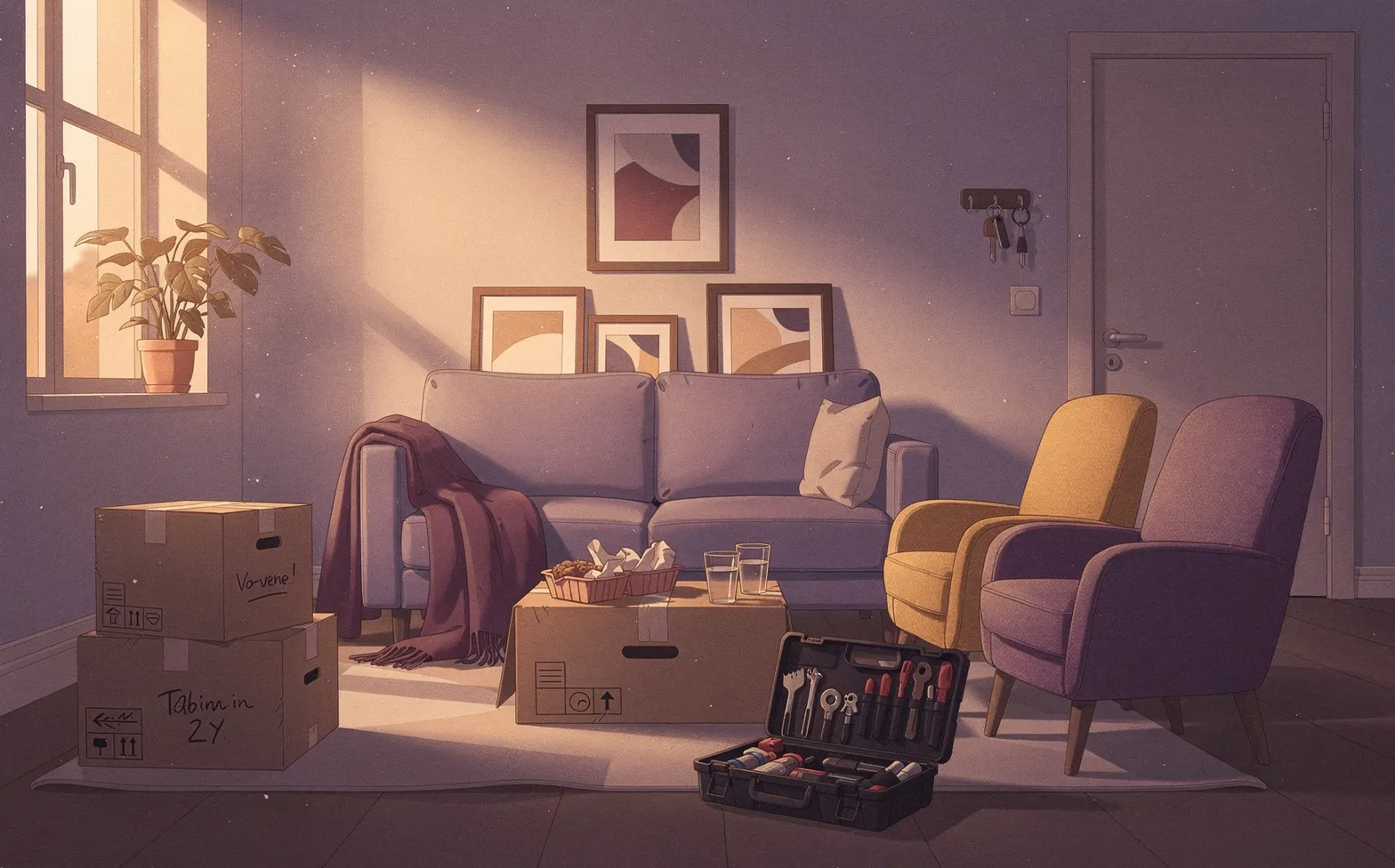
A cozy living room on moving day evening: stacked cardboard boxes labeled in two handwriting styles, a sofa with a throw blanket, two mismatched armchairs side by side, a plant on the windowsill, framed pictures leaning against the wall, an open toolbox on the floor, takeaway containers and two glasses on a box used as a table, and keys hanging by the door.

You found all eight

Moving in together is not one decision; it is a hundred small ones hiding in boxes. Whose mug wins, who waters the plant, what goes on the wall. Couples who do this well do not agree on everything by default; they notice the negotiations and have them out loud, one box at a time.

Talk it through with an AI coach

What is the moving boxes?

The moving boxes is an interactive scene about moving in together: one illustrated living room on the first evening in a first apartment together, eight clickable objects, and behind each one a real conversation that cohabiting couples eventually have. It takes about five minutes and covers what relationship research and long partnerships agree on: a shared home is not found in the lease, it is negotiated one object at a time.

Every object is ordinary on purpose. Boxes labeled in two handwritings, mismatched armchairs, a plant nobody has claimed yet. Moving in together rarely turns on the big talk; it turns on who waters what, whose picture goes up, and how the flat-pack argument ends.

How to play

  • Look around the apartment and tap anything that glows.
  • Read the short card: one honest cohabiting truth per object.
  • Follow the trail: each card links to a tool or read that goes deeper.
  • Find all eight and the apartment gives you its last word.

Moving in together, without the ambush

Most first-apartment friction is not incompatibility; it is two working systems colliding without a map. Money habits, tidiness thresholds, alone-time needs, and the invisible work of running a household all arrive in the same van, and each one settles into a default within weeks whether you choose it or not. The couples who thrive in a shared home are the ones who make those defaults on purpose: they name the differences early, split the invisible work out loud, and protect one small daily ritual that belongs to the new place.

If the boxes have surfaced conversations you keep postponing, you can talk them through with an AI relationship coach that remembers your story, or start smaller with the other relationship tools.

Frequently asked questions

When is the right time to move in together?
There is no universal month count; readiness shows in conversations, not calendars. If you can talk about money, chores, alone time, and what happens if it does not work, you are readier than a couple with more years and none of those talks. Moving in to test the relationship or to save rent alone tends to skip exactly the conversations this room is about.
We keep arguing while unpacking. Is that a bad sign?
It is a normal sign. Moving is genuinely stressful, and the first weeks compress dozens of small negotiations into a tired household. What matters is not whether the flat-pack fight happens but how it ends: whether you can pause, repair, and split the decision instead of winning it. If the same argument keeps returning after the boxes are gone, look at the need underneath it.
How should we split chores in a first apartment together?
Explicitly, early, and by whole responsibilities rather than tasks. Owning "the plant lives" or "we never run out of essentials" beats trading individual chores, because it moves the noticing and planning, not just the doing. Revisit the split after a month; the first version is always wrong somewhere, and adjusting it calmly is the actual skill.

These tools are for reflection, not diagnosis. They are not a substitute for professional care.